For a long time, most homes followed the same formula: a hardworking but modest cooking space tucked away and a formal dining room that only got real use on holidays. The rest of the year, that dining room was mostly just another room to dust and decorate.
That’s changing fast. According to Houzz’s 2025 U.S. Kitchen Trends Study, 35% of homeowners increase their cooking space during a kitchen redesign, and when they do, they’re far more likely to borrow from the dining room (29% of projects) than the living room (12%). Homeowners aren’t saying goodbye to eating spaces all together—they’re choosing to gather in a larger, more functional space instead of a low-use formal room.
Industry experts agree this trend will continue. The National Kitchen & Bath Association’s 2026 Kitchen Trends Report found 76% of professionals expect cooking spaces to grow over the next three years, even as overall home sizes shrink. They predict more personalized layouts with better storage, natural light, and wellness features. The cooking space is no longer just for meals—it’s where life happens.
Why Dining Rooms Are Losing Square Footage
Families want to be together. Instead of separating cooking from conversation, homeowners are opening walls and reallocating dining room square footage to create connected gathering spaces.
We’ve also become more casual. Weeknight dinners at the island, weekend brunch at the breakfast nook, kids doing homework while someone preps dinner—these moments fit better in an expanded space with casual seating than a formal dining room.
Practicality drives this too. Most would rather have storage, prep space, and better flow than another room needing furniture and cleaning. Shifting square footage makes sense when you see how homes are actually used.
The Rise of Massive Islands
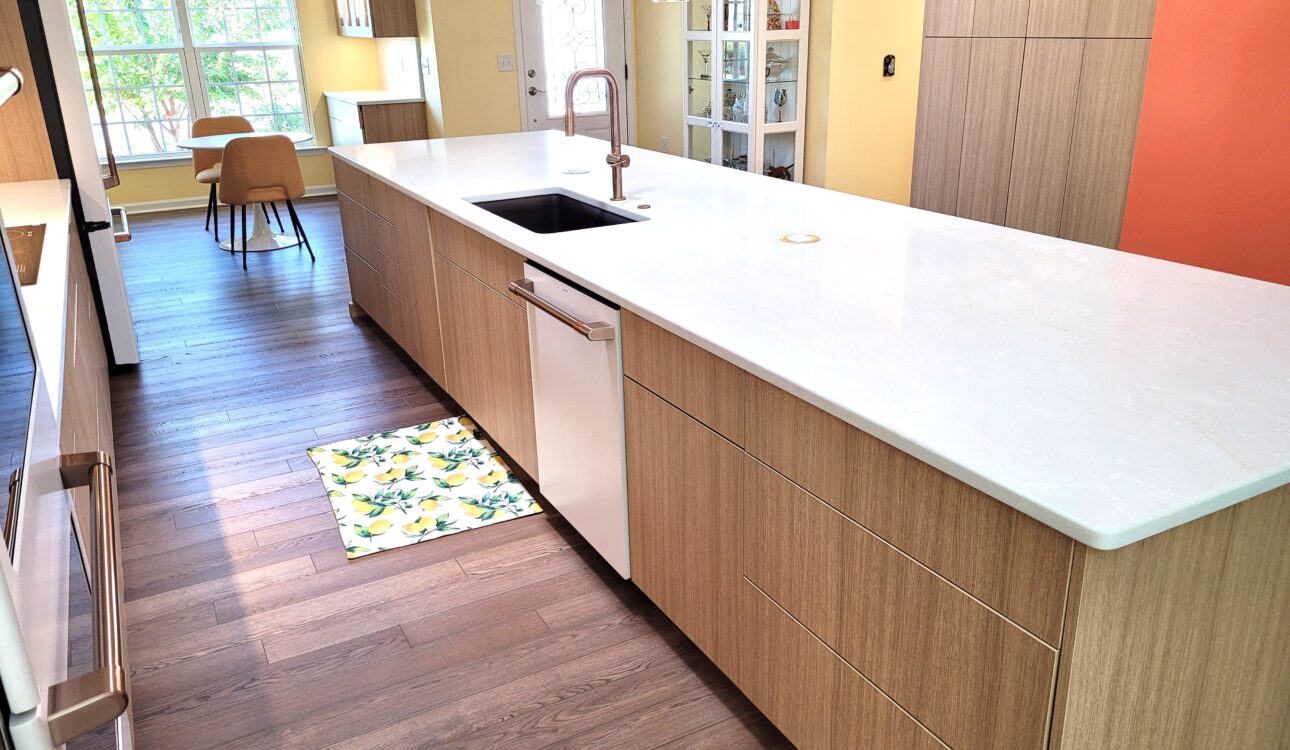
If dining rooms once anchored special occasions, the island now anchors everyday life. In a comprehensive kitchen redesign, the island acts as the functional bridge between precision prep work and social engagement. We are seeing a move away from modest, standalone stations toward substantial, multi-functional hubs that accommodate casual dining, homework, and professional tasks simultaneously.
By engineering an oversized island, we can incorporate high-utility features—such as a microwave drawer or wine refrigeration—that strategically pull traffic away from the main cooking zone. Integrating a secondary prep sink is a particularly effective maneuver for multi-cook households; it prevents crowding at the primary cleanup station and helps to establish distinct work zones. This expanded surface area effectively replaces the underutilized formal table with a high-performance workspace.
Storage and Functionality
Bigger footprints mean higher expectations. Smart storage—increased cabinetry and island drawers—keeps clutter hidden. Innovative storage solutions—pull-out drawers, dedicated spots for small appliances, tray dividers, and deep drawers for pots and pans—are some of the most requested features in kitchen redesign projects.
When Expansion Isn’t Possible
Not every floor plan allows for expansion. In some homes, the space backs up to hallways, stairs, load-bearing walls, or essential rooms like entries and baths that can’t easily give up square footage.
When that’s the case, you can still make it feel and function bigger. Reworking the layout for better traffic flow, rethinking appliance placement, and adding smart storage—like tall pantries and deep drawers—maximizes what you have.
Visual tricks help too. Wider openings to nearby rooms, a peninsula instead of an island, or an enlarged opening can connect spaces without taking their square footage. Larger windows, better lighting, and a clean, cohesive design palette all make kitchens feel more open and airy.
Make Your Space Work for You
If your dining room is mostly used for storage or special occasions while your space feels cramped and overworked, your home may not be set up for how you actually live. A thoughtful kitchen redesign is a chance to fix that.
If you’re considering a remodel and wondering what’s possible in your space, we are here to help. We can walk you through layout options, structural considerations, and smart storage ideas that make the most of every square foot.
Contact us today to schedule a complementary consultation and start planning a kitchen remodel that truly fits your home—and the way you live in it now.